
Pediatric Trauma and Stressor-related Disorders

< Back to Toolkits

All children may experience very stressful events that affect how they think and feel. Most of the time, children recover quickly and well; however, sometimes children who experience severe stress—such as from an injury or abuse, the death or threatened death of a loved one, or violence—will be affected long-term.

The child may experience this trauma directly or could witness it happening to someone else. Children may not disclose traumatic events for fear of negative reactions or retribution. One should have a high index of suspicion if a child presents with a significant change in their emotional state or behaviors.

Post-traumatic Stress Disorder (PTSD) results in heightened amygdala activation and reduced activity in the Ventromedial Prefrontal Cortex (vmPFC) and the Anterior Cingulate Cortex (ACC) along with reduced hippocampal volume, resulting in hyperarousal and difficulties with fear processing.

The longer-term consequences of PTSD include elevated risk for other mental disorders and suicide, substantial impairment in role functioning, reduced social and economic opportunity, and earlier onset of chronic diseases, particularly cardiovascular disease.

Pediatric Trauma and Stressor-related Disorder Resources

Guidelines for Diagnosis and Screening

Presenting Complaints

  • Injuries—bruises, scars or other signs that seem unlikely to have been accidental
  • Somatic symptoms—stomach aches, headaches, pain, numbness
  • Regressed behavior, such as nocturnal enuresis, thumb sucking, etc.
  • Withdrawn behavior and diminished interest in formerly enjoyed activities
  • Irritable, angry, or aggressive behavior, including extreme temper tantrums
  • Poor concentration
  • Sleep disruption—difficulties falling or staying asleep, awakening and/or frightened at night, nightmares
  • Hypervigilance and exaggerated startle response
  • Feeling numb (physically and emotionally)
  • Self-harm and/or thoughts of suicide

Epidemiology

Although trauma exposure is relatively common in childhood and adolescence, by contrast, a small proportion of trauma-exposed children develop trauma-related disorders. Studies have found that:

  • About 62% of children under that age of 18 in the United States reported experiencing a traumatic event.
  • About 16% of children exposed to a traumatic event will develop PTSD. Females are at greater risk of some types of trauma (e.g. sexual) and resultant PTSD.
  • Of those children and teens who have had a trauma, 3% to 15% of girls and 1% to 6% of boys develop PTSD.
  • Rates of PTSD are higher for certain types of trauma survivors depending upon:
    • How severe the trauma is
    • How the parents/caregivers react to the trauma
    • How close or far away the child is from the trauma
    • If the trauma is interpersonal (as opposed to a natural disaster)

Types of Trauma and Stressor-related Disorders:

Reactive Attachment Disorder (RAD)

  •  Diagnosed only in children and typically evident before age 5, this is a condition found in children who have experienced severe neglect or abuse, resulting in difficulties forming healthy emotional attachments with caregivers. A child with RAD demonstrates inappropriate attachment behaviors, rarely seeking comfort, support and protection from caregivers.

Disinhibited Social Engagement Disorder

  • Diagnosed only in children and typically associated with a history of severe neglect or deprivation and/or frequent changes in caregivers. A child with Disinhibited Social Engagement Disorder actively approaches and interacts with unfamiliar adults or relative strangers in a way that is culturally inappropriate and violates social boundaries of the culture.

Posttraumatic stress disorder (PTSD):

  • Occurs in some individuals after exposure to actual or threatened death, serious injury or sexual violence.
  • Individuals with PTSD demonstrate at least one of these symptoms for over a month:
    • a) the presence of fear-based reexperiencing such as flashbacks, nightmares,
    • b) alterations in arousal and reactivity associated with the traumatic event (s) e.g. sleep disturbance, hypervigilance, 
    • c) persistent avoidance of stimuli associated with the traumatic event (s),
    • d) negative alterations in cognitions and mood associated with the traumatic event
    • e) dissociative symptoms.
  • For children age 6 and under
    • Symptoms often present as sleep disorders, irritability and/or tantrums, poor concentration, and/or reenactment in play or in physical activities that may model the trauma.  These symptoms have to persist for more than month following traumatic event (s). DSM5-TR has two PTSD criteria, (i) adults, adolescents and children older than 6 years old and (ii) for children 6 years and younger.

Acute stress disorder

  • Occurs in response to exposure to actual or threatened death, serious injury or sexual violence. It is considered a precursor to PTSD with similar criteria; however,  the symptom pattern in acute stress disorder is restricted to a duration of 3 days to 1 month following exposure to traumatic event.

Adjustment disorders

  • A psychological response to significant stressor or life change that results in emotional and behavioral symptoms. These symptoms typically arise within 3 months of the stressor and can include feelings of sadness, anxiety, hopelessness and difficulty functioning in daily life. The stressor can be any severity and does not need to be a serious traumatic event.

Prolonged grief disorder

  • Characterized by an intense and persistent form of grief following the loss of a loved one. It differs from normal grief by its duration and severity; typically, beyond 6 to 12 months after the loss and causing significant functional impairments.

Other specified trauma- and stressor-related disorders

  • When symptoms are characteristic of a trauma or stressor related disorder and cause significant distress or impairment, but do not meet the full criteria for any specific disorder listed in this category.

Developmental Trauma Disorder

  • Proposed, but not currently a DSM-5-TR diagnosis.
  • Defined as the complex and pervasive exposure to life-threatening events or severe neglect that occurs repeatedly through sensitive periods of infant and child development and is characterized by:
    • Affective and Physiological Dysregulation
    • Attentional and Behavioral Dysregulation
    • Relational and Self Dysregulation
    • Functional Impairment, often lifetime

Etiology

Risk Factors: The causes of trauma and stress disorders are multifactorial;

  • Severity and proximity to the trauma
  • Genetics and temperamental factors- difficult temperament, slow to warm up, passive and highly reactive.
  • Female > male- females are more likely to experience internalizing disorders and males externalizing behaviors.
  • Stage of development: -young children tend to display regressed behavior and clinginess; school age children tend to display aggression and somatic complaints.
  • Chronic family adversity; poor nurturing and attachment
  • Co-morbid psychopathology – preceding or co-occurring diagnoses, (especially depression) attention deficit–hyperactivity disorder, and phobic disorder.

Protective Factors:

  • Genetics and temperamental factors – positive temperament, high cognitive abilities, lack of family history of serious mental illness.
  • Positive coping strategies, self-esteem, ability and social responsiveness.
  • Supportive family milieu (trusting relationship with at least one adult).
  • Social supports in the community: friends, school, church, etc.
  • Being involved in a supportive group (sports, hobbies, interest groups, clubs, etc.).

Screening and Rating Scales for Pediatric Trauma and Stressor-related Disorders

Clinician Administered

Assessment:

  • Trauma related disorders should be suspected for any child with a significant change in emotional states or behaviors.
  • Create a safe environment and develop rapport.
  • Ask direct questions about whether the child has suffered trauma, and if so, what happened.
  • If the child will not talk or developmentally cannot use words to talk about the trauma, encourage the child to use play or draw a picture to communicate their inner life.
  • Collect data from multiple sources regarding the child’s trauma (or suspected trauma) and symptoms.
  • Assess safety of home environment and family unit – Is DCF involved? Does DCF-136 report need to be filed? Has the whole family has been traumatized?
  • Assess for other psychiatric symptoms – the most common co-occurring diagnoses include depression, substance use, separation anxiety, panic disorder, oppositional defiant disorder, and ADHD.
  • Ask about substance use, including over the counter medications, prescribed medications, caffeine, and illicit substances, nicotine, marijuana, vapes, pills, legal and illegal stimulants, inhalants, etc.).
  • Assess for self-harm, suicidal ideation, suicidal planning, or history of suicidality. PTSD is a risk factor for suicidality.  Can start with PHQ-9 with focus on question 9.
  • Ask about re-experiencing; avoidance; arousal/reactivity; changes in mood; negative beliefs about self, others, or the world; sleep; appetite; energy level; motivation; school performance; and friends.

 Medical Workup

  • Comprehensive physical exam with screening for physical injury or sexual abuse, if indicated.

Differential Diagnosis

ADHD, adjustment disorder, depression, disruptive mood dysregulation disorder, social anxiety, panic disorder, generalized anxiety disorder, oppositional defiant disorder.

Comorbidity (in 35% of children with PTSD)

Anxiety disorders, depression, externalizing behavior problems, substance use disorders, and self-harm and suicidal behaviors. 

Assessment of Risk: Individuals with PTSD are at higher risk for self-harm and suicide

If a patient is reporting suicidality, provide interventions (from less severe to more severe):

Assessment of Risk: Individuals with PTSD are at higher risk for self-harm and suicide

Guidelines for Treatment

Treatment for trauma and stressor-related disorders typically involves a combination of psychotherapy, medications (as indicated) and a supportive environment.  Psychotherapy, such at Trauma-Focused Cognitive Behavioral Therapy (CF-CBT) are often the first line of treatment, alongside strategies to help the child feel safe and supported. Medications may be considered for symptom management, particularly in cases of co-occurring anxiety or depression. 

Trauma-focused Psychotherapies

Treatment for trauma and stressor-related disorders in children and teens typically involves a combination of psychotherapy, potentially with medication, and a supportive environment. Therapy helps the child (and often the family as well) process the traumatic event, develop coping skills, and manage related symptoms like anxiety, depression, and avoidance behaviors. 

Yale Child and Family Traumatic Stress Intervention (CFTSI)

CFTSI is an evidence-based early intervention to prevent the onset of PTSD

  • A brief treatment (5 -8 sessions) for children and youth 7-18 years old, together with parent(s) or other caregiver(s).
  • Increases family support, enhances communication and teaches the family skills to manage the child’s distressing and/or negative reactions.
  • Must be in the immediate aftermath (30-45 days) of a potentially traumatic event or disclosure of physical or sexual abuse. 
  • For more serious symptoms, continue therapy with Trauma-Focused CBT.
  • For more information or to make a referral: Ask the Center for Traumatic Stress and Recovery- CFTSI treatment: 1-844-362-9272.

Cognitive Behavioral Therapy (CBT)

  • Trauma Focused CBT (TF-CBT) – First line for most. Utilizes a variety of exposure techniques, such as imagery rescripting (ImRs) and reliving. Therapeutic techniques help process and modify unhelpful peri‐ or post‐traumatic thoughts and feelings, such as cognitive distortions, guilt, and shame. 
  • Trauma Informed CBT (TI-CBT) Teaches cognitive restructuring to challenge trauma‐related thoughts and beliefs.

Eye Movement Desensitization and Reprocessing (EMDR)

  • Utilizes bilateral stimulation (eye movements, alternating hand/finger taps, sounds) while the therapist guides the patient to focus on a specific distressing memory. Through the stimulation, the patient gradually processes the memory, reducing its emotional intensity and distress. 
  • Evidence-based and generally effective

Prolonged Exposure (PE):

  • Focuses solely on gradual exposure without a cognitive component and is usually effective for patients with psychotic symptoms.

Play Therapy

  • May be used for younger children to help them express their feelings and process the trauma through play. 

System Level Trauma-Informed Care (for all clinicians)

  • Emphasizes shifting the focus from “What’s wrong with you?” to “What happened to you?”
  • Creates a safe, supportive, and empowering environment for individuals who have experienced trauma. 
  • Encourages healthy coping mechanisms (teaching relaxation techniques, education about healthy sleep and eating, and enjoyable activities).
  • Encourages open communication in a non-judgmental setting.
  • Collaborating with school, other treaters, etc. to help child with any needed accommodations.

ACCESS Mental Health Connecticut is always just a phone call or click away and is available to help primary care practitioners, their patients and their families with diagnostic assistance, advice, resources and referral assistance. www.accessmhct.com

Medication Guidelines

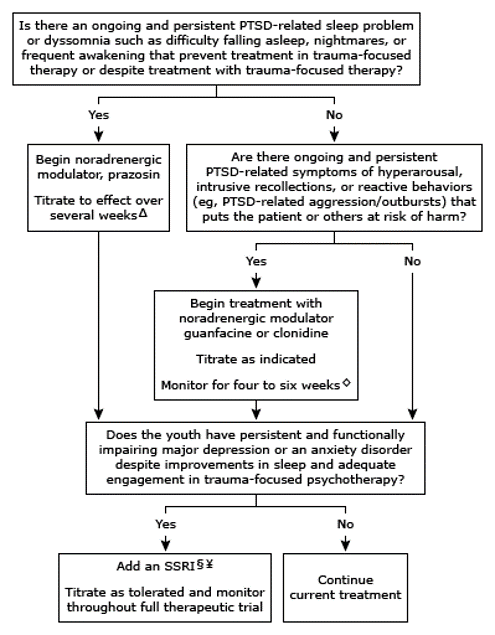
Medications are useful augmentation for trauma-focused psychotherapy when PTSD symptoms are severe: sleep disruption/dyssomnia, intrusive recollections, hyperarousal, reactive outbursts/aggression) or co-occurring disorders, such as anxiety, depression, ADHD, etc. (See medication table below).
  • Sleep Disruption/Dyssomnia: (common and important to treat):
    • Prazosin (Alpha1 adrenergic agonist)
      • 1 mg 30 min before bedtime
      • Increase by 1 mg q 4 days up to 5 mg
      • Some patients require higher doses (up to 10 mg)
    • Clonidine and Guanfacine (Alpha2 adrenergic agonist)—as below
  • Hyperarousal, Intrusive Recollections, and Reactive Behaviors, Sleep Disruption (may be helpful for co-occurring ADHD):
    • Guanfacine (Alpha2 adrenergic agonist)
      • Extended release 1 mg q evening and increase until effective (up to 4 mg).  May dose bid for hyperarousal in the daytime not sufficiently treated with q pm dose. Target .08 to .12 mg/kg/day.
        • For young children that cannot swallow pills, use regular (not ER) guanfacine crushed into applesauce or ice cream.
        • May require bid dosing
    • Clonidine (Alpha2 adrenergic agonist)
      • Extended release 0.1 mg at hs. Increase to maximum dose of 0.2 to 0.5 mg
        • For young children, begin with short acting 0.05 mg at hs and increase as needed.
        • Dose bid for short acting
        • More sedating than guanfacine
  • Depression, Irritability, Anxiety:
    • Sertraline (SSRI)
      • 12.5-25 mg daily and increase gradually no higher than 200 mg
    • Escitalopram (SSRI)
      • 5-10 mg daily and increase up to 20 mg (may go higher for depression)
  • Serious Agitation, Dysregulation, Aggression, Hyperarousal, Brief Psychotic Episodes: Second Generation Antipsychotics (SGAs)
    • Quetiapine (Seroquel)
      • 25 mg at hs and increase 25 mg increments q 4 days (max 200 mg)
    • Risperidone (Risperdal)
      • 0.25 mg at hs and increase by 0.25-0.5 mg daily (up to 2 mg)
FIGURE: Algorithm for Medication Therapy for PTSD Symptoms
Reference: Posttraumatic stress disorder in children and adolescents: Treatment overview – UpToDate

References

  1. American Psychiatric Association. (2022). Diagnostic and Statistical Manual of Mental Disorders (5th ed., text rev.). American Psychiatric Publishing. doi/book/10.1176/appi.books.9780890425787
  2. Post-traumatic Stress Disorder in Children. (CDC). Post-Traumatic Stress Disorder in Children | Children’s Mental Health | CDC
  3. Talking to Children When Scary Things Happen. (Center for Resilience and Wellbeing in Schools).  Talking to Youth When Scary Things Happen | The National Child Traumatic Stress Network
  4. Age-Related Reactions to a Traumatic Event. The National Child Traumatic Stress Network. Age-Related Reactions to a Traumatic Event | The National Child Traumatic Stress Network
  5. What is Child Trauma?  (SAHMSA) Understanding Child Trauma | SAMHSA Library
  6. Strawn, J. R., Keeshin, B. M., & Cohen, J. A. (2025). Posttraumatic stress disorder in children and adolescents: Treatment overview  UpToDate. Retrieved April 22, 2025., https://www-uptodate-com.yale.idm.oclc.org/contents/posttraumatic-stress-disorder-in-children-and-adolescents-treatment-overview
  7. Trauma and stressor-related disorders in children. Children’s Hospital of Philadelphia.. Retrieved April 22, 2025. https://www.chop.edu/conditions-diseases/trauma-and-stressor-related-disorders-children
  8. Gunaratnam, S., & Alisic, E. (2017). Epidemiology of trauma and trauma-related disorders in children and adolescents. In M. A. Landolt, M. Cloitre, & U. Schnyder (Eds.), Evidence-based treatments for trauma related disorders in children and adolescents (pp. 29–47). Springer International Publishing/Springer Nature. https://doi.org/10.1007/978-3-319-46138-0_2
  9. Torrico TJ, Mikes BA. Post-traumatic Stress Disorder in Children. StatPearls. https://www.ncbi.nlm.nih.gov/books/NBK559140/
  10. PTSD in Children and Adolescents. National Center for PTSD. https://www.ptsd.va.gov/professional/treat/specific/ptsd_child_teens.asp
  11. Posttraumatic stress disorder in children and adolescents: Epidemiology, clinical features, assessment, and diagnosis. UpToDate.  Accessed 8/13/2025 https://www.uptodate.com/contents/posttraumatic-stress-disorder-in-children-and-adolescents-epidemiology-clinical-features-assessment-and-diagnosis?search=child%20Ptsd%20treatment&sectionRank=2&usage_type=default&anchor=H104866379&source=machineLearning&selectedTitle=5~150&display_rank=5#H104866379
Oversight of the ACCESS Mental Health program is provided by the Central Administrative team at Carelon Behavioral Health.  Any questions regarding the statewide program can be directed to: Elizabeth Garrigan, LPC ~  Statewide Program Director, ACCESS Mental Health CT ~  Carelon Behavioral Health ~  500 Enterprise Drive, Suite 3D ~  Rocky Hill, CT 06067 ~  860-263-2095 ~  elizabeth.garrigan@carelon.com