All children may experience very stressful events that affect how they think and feel. Most of the time, children recover quickly and well; however, sometimes children who experience severe stress—such as from an injury or abuse, the death or threatened death of a loved one, or violence—will be affected long-term.
The child may experience this trauma directly or could witness it happening to someone else. Children may not disclose traumatic events for fear of negative reactions or retribution. One should have a high index of suspicion if a child presents with a significant change in their emotional state or behaviors.
Post-traumatic Stress Disorder (PTSD) results in heightened amygdala activation and reduced activity in the Ventromedial Prefrontal Cortex (vmPFC) and the Anterior Cingulate Cortex (ACC) along with reduced hippocampal volume, resulting in hyperarousal and difficulties with fear processing.
The longer-term consequences of PTSD include elevated risk for other mental disorders and suicide, substantial impairment in role functioning, reduced social and economic opportunity, and earlier onset of chronic diseases, particularly cardiovascular disease.
Guidelines for Diagnosis
Presenting Complaints
Epidemiology
Although trauma exposure is relatively common in childhood and adolescence, by contrast, a small proportion of trauma-exposed children develop trauma-related disorders. Studies have found that:
Types of Trauma and Stressor-related Disorders:
Reactive Attachment Disorder (RAD)
Disinhibited Social Engagement Disorder
Posttraumatic stress disorder (PTSD):
Acute stress disorder
Adjustment disorders
Prolonged grief disorder
Other specified trauma- and stressor-related disorders
Developmental Trauma Disorder
Etiology
Risk Factors: The causes of trauma and stress disorders are multifactorial;
Protective Factors:
Guidelines for Screening and Assessment
Clinician Administered
Assessment:
Medical Workup
Differential Diagnosis
ADHD, adjustment disorder, depression, disruptive mood dysregulation disorder, social anxiety, panic disorder, generalized anxiety disorder, oppositional defiant disorder.
Comorbidity (in 35% of children with PTSD)
Anxiety disorders, depression, externalizing behavior problems, substance use disorders, and self-harm and suicidal behaviors.
Assessment of Risk: Individuals with PTSD are at higher risk for self-harm and suicide
If a patient is reporting suicidality, provide interventions (from less severe to more severe):
Assessment of Risk: Individuals with PTSD are at higher risk for self-harm and suicide
Treatment
Treatment for trauma and stressor-related disorders typically involves a combination of psychotherapy, medications (as indicated) and a supportive environment. Psychotherapy, such at Trauma-Focused Cognitive Behavioral Therapy (CF-CBT) are often the first line of treatment, alongside strategies to help the child feel safe and supported. Medications may be considered for symptom management, particularly in cases of co-occurring anxiety or depression.
Treatment for trauma and stressor-related disorders in children and teens typically involves a combination of psychotherapy, potentially with medication, and a supportive environment. Therapy helps the child (and often the family as well) process the traumatic event, develop coping skills, and manage related symptoms like anxiety, depression, and avoidance behaviors.
Yale Child and Family Traumatic Stress Intervention (CFTSI)
CFTSI is an evidence-based early intervention to prevent the onset of PTSD
Cognitive Behavioral Therapy (CBT)
Eye Movement Desensitization and Reprocessing (EMDR)
Prolonged Exposure (PE):
Play Therapy
System Level Trauma-Informed Care (for all clinicians)
ACCESS Mental Health Connecticut is always just a phone call or click away and is available to help primary care practitioners, their patients and their families with diagnostic assistance, advice, resources and referral assistance. www.accessmhct.com
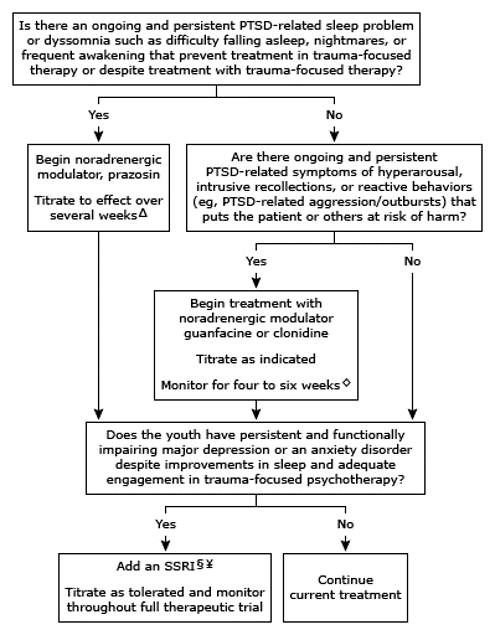
Medications are useful augmentation for trauma-focused psychotherapy when PTSD symptoms are severe: sleep disruption/dyssomnia, intrusive recollections, hyperarousal, reactive outbursts/aggression) or co-occurring disorders, such as anxiety, depression, ADHD, etc. (See medication table below).